
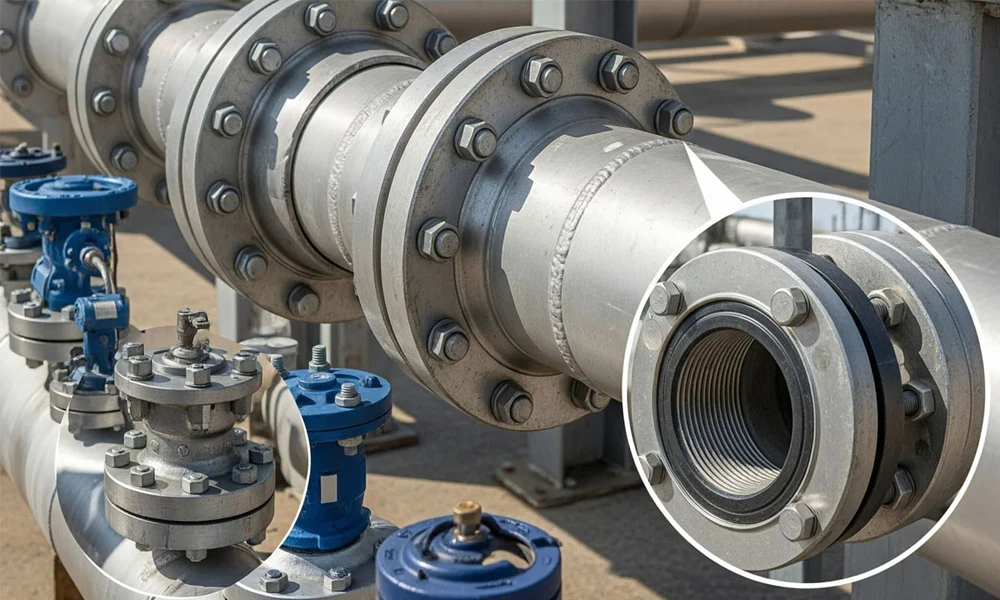
Unexpected failures rarely begin with major equipment. Small connection points often trigger costly incidents. Across refineries, offshore assets, and transmission networks, secure joints protect flow integrity every day. Equipment reliability depends on connection quality during harsh operating conditions. For this reason, the oil and gas flange remains essential across critical infrastructure. Material choice, sealing performance, and installation accuracy all influence operational security.
Why Do Connection Points Deserve Greater Attention?
Pressure fluctuations place constant stress on pipeline assemblies. A weak joint can release product unexpectedly. Repair crews then face production losses and safety concerns. While pumps receive significant attention, connection interfaces deserve equal scrutiny. Field inspections often reveal sealing defects before larger mechanical issues emerge. Such findings highlight the role flanges play during risk management programs.
Engineering Features That Strengthen System Reliability
Performance depends on more than metal strength alone. Gasket compatibility influences sealing effectiveness under varying conditions. Bolt loading affects joint stability across operating cycles. Proper flange selection addresses multiple operational concerns simultaneously.
- Resists pressure variation during process changes
- Maintains sealing surfaces under thermal movement
- Simplifies equipment isolation during inspections
- Enables replacement without extensive pipe removal
Each characteristic contributes practical value inside active facilities.
How Material Selection Influences Operational Outcomes
Corrosive media create challenges across production environments. Exposure can weaken surfaces over extended service periods. Engineers evaluate chemical properties before final specification decisions. Stainless grades perform well under corrosive exposure. Alloy options address elevated temperature requirements. Carbon steel remains suitable for selected operating environments where corrosion risks stay controlled.
A refinery processing sour gas requires specialized metallurgy. Material selection then becomes a protective measure rather than a procurement decision.
Reducing Failure Exposure During Critical Operations
Operational continuity depends upon dependable mechanical connections. During shutdown planning, maintenance teams assess joint condition carefully. The right oil and gas flange helps maintain sealing integrity throughout equipment transitions. Contrast matters when comparing planned maintenance against emergency repairs. One approach protects production schedules; the other introduces uncertainty, cost, and elevated operational exposure.
Key inspection priorities include:
From Installation Quality to Long-Term Confidence
Installation practices influence performance long after commissioning. Even premium components deliver poor results when assembled incorrectly. Torque procedures require precision across each fastening point. Experienced technicians understand load distribution principles. Their attention helps prevent uneven sealing pressure. Over years of service, those early decisions often determine whether a connection remains dependable.
A Detail That Protects Entire Operations
A flange connection occupies little physical space, yet its influence reaches far beyond the joint itself. When gasket selection, bolt loading, and metallurgy align correctly, operators gain stability across processing systems. The strongest lesson emerges during inspections: major disruptions often trace back to overlooked connection details rather than large equipment failures.
