
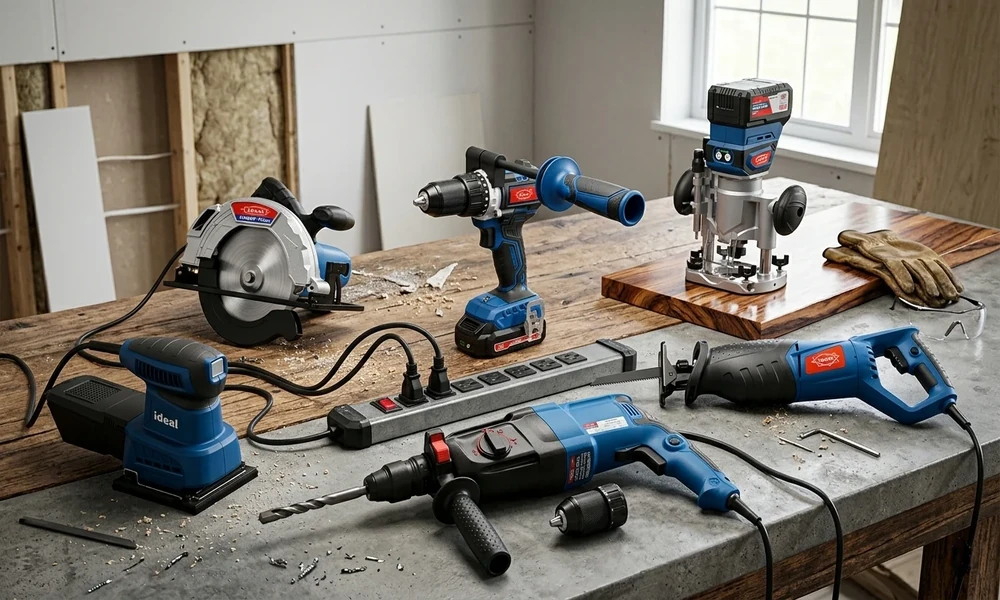
The distant whine of a saw or the punch of a drill used to be a sure sign of heavy-duty labor. Now, that same sound signals a revolution, where advanced engineering meets everyday tasks, and power tools are not just equipment, but partners in productivity.
The Dawn of Power Tools: From Manual Labor to Mechanization
Imagine a world where every nail was driven with a hammer and every board was cut by hand. Early innovations like the first electric drill uprooted these traditions, turning hours of effort into minutes of work. The leap from hand-driven tools to mechanized power marked a pivotal shift in both construction and DIY. The introduction of simple electric saws, drills, and sanders not only boosted efficiency, but redefined what was possible in the average workshop.
The next major transformation was the move from corded to cordless tools. This change freed workers from power outlets, sprawling extension cords, and the chore of untangling cables. Suddenly, mobility became a core feature of productivity.
The Rise of Cordless Power Tools: Mobility Meets Performance
It is no exaggeration to say that cordless tools have rewritten the rulebook for job sites and home projects alike. The real breakthrough came with rapid advancements in battery technology. Lithium-ion power packs brought longer runtimes, faster charging, and lighter weights, making it feasible for even heavy-duty tools to operate away from a plug.
This leap has had an undeniable impact on work efficiency and safety. Workers now move freely through sites, unencumbered by cords that once posed trip hazards. Brands like Dewalt, Milwaukee, and Makita lead this charge, with their high-capacity batteries and smart charging systems setting new standards for performance. Consider Dewalt’s versatile 20V Max series or Milwaukee’s M18 and M12 platforms, these are not just incremental upgrades, but tools that embody a philosophy of mobility and power.
Smart and Connected Power Tools: The Integration of IoT
These days, the smartest tool in the box may also be the most connected. The integration of Bluetooth, apps, and data tracking is transforming how both professionals and hobbyists work. Smart tools now allow users to fine-tune torque settings via their phones, receive maintenance alerts, and even locate misplaced equipment via integrated trackers.
For pros, these features mean better asset management and increased accountability on job sites. Hobbyists enjoy the convenience of automatic updates and troubleshooting guides at their fingertips. Examples abound, from Milwaukee’s ONE-KEY platform that customizes and tracks tools, to Bosch’s connected drills, which record data on usage and performance.
Versatility and Multi-functionality: Tools That Do More
Oscillating multi-tools have become a workshop staple precisely because they handle a dizzying range of tasks, from flush cuts to sanding and scraping. The rise of combination kits further amplifies versatility, bundling drills, impact drivers, saws, and batteries so users can tackle any job without piecing together separate systems.
This multi-functionality does more than save money. It saves valuable space and slashes setup time, especially for users working in tight quarters or moving between locations.
Ergonomics and User-Centered Design: Redefining Comfort and Control
Today’s power tools do not just work harder; they work smarter for the user. Manufacturers have invested heavily in weight reduction, textured grips, and intuitive controls to ensure comfort during extended use. Innovations like anti-vibration technology and noise dampening features are making it possible to work longer without fatigue or risk of injury.
These changes have a direct impact on worker health and productivity. Less strain means fewer injuries, while lower noise levels increase focus and communication on the job.
Specialized Power Tools for Niche Applications
The innovation wave does not stop at general-purpose tools. Sanders, polishers, grinders, and routers have each undergone dramatic improvements. Think of brushless motors that deliver more power with less heat, or dust collection systems that make cleanup a breeze. For those in green building, new lines of energy-efficient and low-emission tools are emerging, helping to meet stricter environmental standards.
Future Trends: What’s Next for Power Tools?
Artificial intelligence is poised to enter the workshop, from automated screw tracking to predictive maintenance alerts. Expect further leaps in sustainability, as brands incorporate recycled materials and energy-saving designs. The integration of augmented reality and wearables promises workers live instructions and overlays right in their field of vision, turning even complex repairs into step-by-step guided tasks.
How These Innovations are Changing Work Practices Today
The net result? Work is faster, more precise, and safer than ever before. Precise measurements, rapid tool changes, and better ergonomics are no longer novelties, but expectations. The democratization of power tools has also fueled a surge in DIY culture, empowering homeowners and remote workers to take on projects that once required professionals.
For those looking to stay ahead of the curve, exploring the latest GSM Depot power tool deals offers access to emerging models and technologies as soon as they hit the market.
In the end, power tools are not just changing how we work. They are redefining who gets to build, create, and transform the world around them, one innovation at a time.
